
Detoxification Gene Variants in Recurrent Miscarriage
Molecular Human Reproduction· 2009· 34 citations
A case-control genetic study evaluating CYP1A1, CYP2D6, GSTM1, GSTT1, and GSTP1 polymorphisms in unexplained recurrent miscarriage.
This case–control study examined phase I (CYP1A1, CYP2D6) and phase II (GSTM1, GSTT1, GSTP1) detoxification gene polymorphisms in 200 North Indian women with unexplained recurrent miscarriage and 300 matched controls. Wild-type CYP1A1 and CYP2D6 genotypes showed protective effects, while the GSTT1 null genotype—and combined high-risk phase I/II variants—significantly increased susceptibility to recurrent miscarriage.
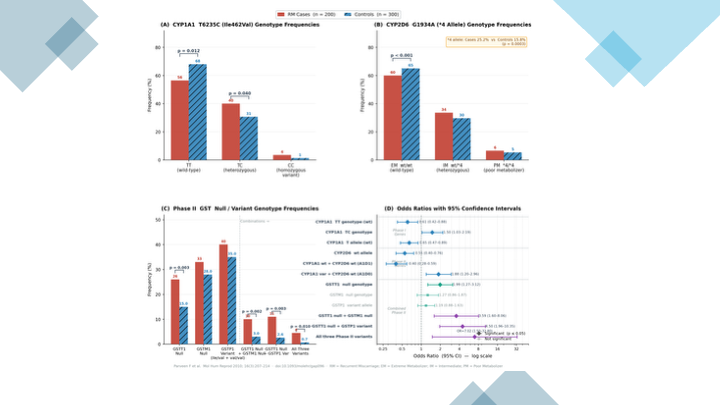
Figure 1. Distribution of phase I and II detoxification gene variants among RM patients and controls.
Previous: Killer immunoglobulin-like receptors (KIRs) and HLA-C allorecognition patterns implicative of dominant activation of natural killer cells contribute to recurrent miscarriagesNext: Influence of activating and inhibitory killer immunoglobulin-like receptors on predisposition to recurrent miscarriages